


A Rope Bunny is the receiving partner in rope bondage and experiences pressure, posture, surrender, or the aesthetics of rope bondage on their own body. The active partner is often called the Rigger; both roles are shaped through communication, not by an automatic power imbalance.
Anyone who wants to understand the meaning of Rope Bunny, Rigger, and Shibari should consider not only the erotic appeal, but also nerve safety, circulation, rope selection, and rapid release. Good bondage feels controlled because safety is considered with every knot.
Rope Bunny and Rigger work as a team
The Rope Bunny provides ongoing feedback about pressure, numbness, tension, and emotional reactions. The Rigger plans the tie, monitors the body, and releases the rope immediately if anything feels uncertain. Surrender does not mean giving up responsibility: either person may change or end a position without having to justify the decision.
Discuss injuries, mobility, circulatory problems, medication, and sensitive areas beforehand. Remove jewelry, keep hair clear of the working area, and agree on an unambiguous safeword plus a nonverbal signal. The Kinky Guide provides a broader framework for setting boundaries.
Choose the right rope and tie
Bondage rope must be suitable for its intended use, clean, and undamaged. Natural and synthetic fibers differ in friction, stretch, and care, so no single material is automatically right for every body and technique. Beginners should start on the floor with simple ties that bear no load and can be released quickly.
Do not run rope across the front of the neck or place it directly over joints, bony prominences, or already irritated skin. Wider rope wraps may distribute pressure more evenly, but they are no substitute for anatomical knowledge. Position knots and wraps so that they remain accessible and cannot become trapped beneath body weight.
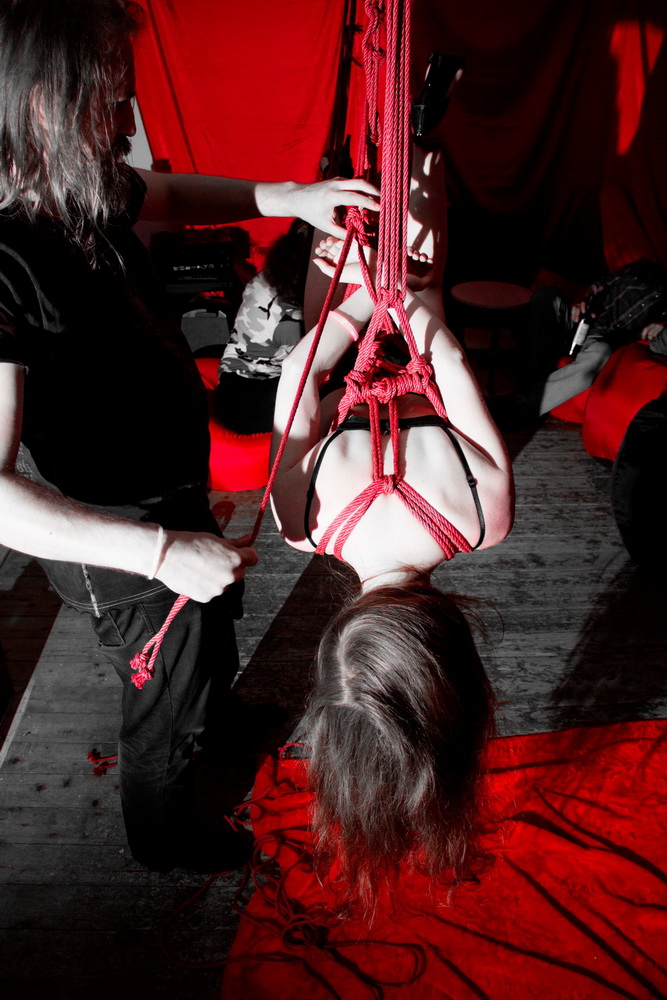
Recognize nerve compression early
Tingling, numbness, burning or electric pain, loss of strength, unusual pallor, or coldness are clear signals to stop. Release the affected tie immediately—not after taking a photo or finishing the scene. An apparently normal pulse does not rule out nerve compression. Check the sensation and mobility in fingers and toes regularly.
Suspension is not a beginner project
In suspension, the rope system supports some or all of the person's body weight. Mistakes can cause falls, nerve damage, or circulatory problems. It requires hands-on instruction from qualified, experienced people, suitable suspension points, appropriate equipment, and a practiced rescue plan. Online images and decorative knots are not sufficient training.
If you want to explore the appeal of helplessness, begin close to the ground or use a securely anchored piece of furniture. The article on the BDSM St. Andrew's Cross offers guidance on controlled four-point restraint.
Safety shears, check-ins, and aftercare
Suitable safety shears must remain visible and within reach; in an emergency, cut even valuable rope without hesitation. Never leave the restrained person alone. After release, they should first sit or lie in a stable position, move affected limbs carefully, and receive water and warmth. Rope marks may remain visible temporarily, but persistent numbness, weakness, severe swelling, or pain requires medical assessment.
The debrief should not focus only on beautiful images. Ask which rope placements felt comfortable, where pressure developed, and how the roles felt emotionally. This information will improve the next session more effectively than a general rating.
Rope Bunny FAQ
Does a Rope Bunny have to be submissive?
No. The receiving role may feel aesthetic, meditative, erotic, or submissive; the people involved define the dynamic themselves.
Which rope is best for beginners?
That depends on the technique, skin, and care requirements. Suitable quality, proper instruction, and simple floor-based ties that can be released quickly are more important.
Is a two-finger gap automatically safe?
No. The spacing can be a useful indicator, but it does not reliably prevent harmful pressure on nerves or tissue.
When must the rope be released immediately?
Release it in cases of numbness, tingling, loss of strength, unusual color or coldness, severe pain, panic, or the agreed stop signal.
The right rope makes bondage more controlled, comfortable, and versatile. Find quality bondage rope for your next rope-play session.


