

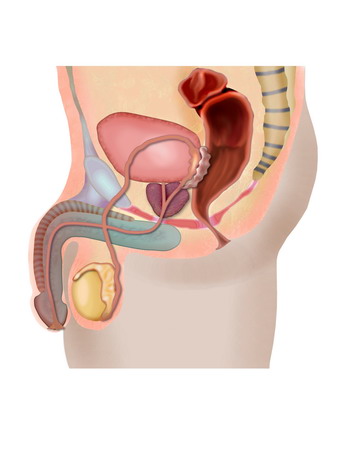
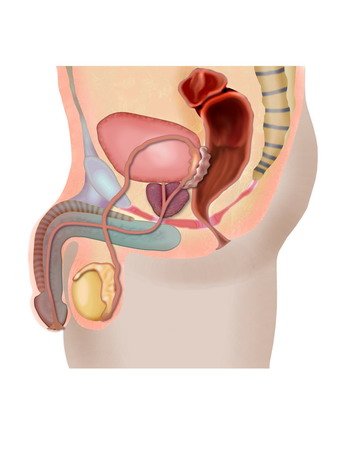
Scrotal infusion is an invasive alteration of the scrotum sometimes discussed in extreme BDSM. Its appeal may involve visible change, body sensation, surrendered control or medical role play. That framing must not hide the anatomy involved: skin, blood vessels, nerves, testicles and surrounding tissue can be seriously injured.
This guide therefore gives no procedure. It contains no recipes, quantities, equipment list or operational technique. Its purpose is to explain risk, identify warning symptoms, encourage timely professional advice and offer lower-risk ways of exploring the fantasy without breaking the skin.
- 1. What the term means
- 2. Appeal, power exchange and informed consent
- 3. Why the medical risks are substantial
- 4. Physical warning signs that must not be ignored
- 5. When urgent or same-day medical care is needed
- 6. Health conditions and professional advice
- 7. Observation without self-treatment
- 8. Lower-risk alternatives that do not break the skin
- 9. An informed decision may end with no
- 10. Related local information and non-invasive categories
- 11. Medical sources and conclusion
- 1 What the term means
- 2 Appeal, power exchange and informed consent
- 3 Why the medical risks are substantial
- 4 Physical warning signs that must not be ignored
- 5 When urgent or same-day medical care is needed
- 6 Health conditions and professional advice
- 7 Observation without self-treatment
- 8 Lower-risk alternatives that do not break the skin
- 9 An informed decision may end with no
- 10 Related local information and non-invasive categories
- 11 Medical sources and conclusion
What the term means
The term refers to an invasive intervention involving scrotal tissue that is sometimes framed as an extreme body practice rather than a medical treatment. The clinical-sounding word “infusion” can suggest a degree of control that a private setting cannot provide. There is no diagnostic assessment, trained monitoring or guaranteed response if a complication develops.
BDSM experience, confidence or previous uneventful attempts do not make an invasive act medically safe. Online demonstrations cannot establish competence or show delayed harm. Clear information separates a medical fantasy from an actual intervention in vulnerable tissue.
Appeal, power exchange and informed consent
Adults may be drawn to transformation, clinical imagery, loss of control or an unusual boundary experience. Those interests can be discussed without shame. Consent is not informed, however, when risks are minimised, expertise is exaggerated or the label “advanced play” is used to pressure someone into proving themselves.
Consent must be freely given, specific and reversible. Agreement to role play is not agreement to an invasive act. Alcohol, drugs, fear of disappointing a partner and a pronounced power imbalance can undermine a free decision. Anyone may decline without defending that choice.
Why the medical risks are substantial
Once the skin barrier is breached, germs can reach deeper tissue. Potential outcomes include local or spreading infection, abscess, bleeding, haematoma, inflammation and tissue injury. Pressure and pronounced swelling may affect blood vessels or nerves. An unexpected allergic or wider systemic reaction is also possible.
An external look cannot reliably identify which structure is affected or predict what will happen next. Pain can be delayed, and mild early symptoms do not rule out a serious problem. An apparently clean room or normal-looking skin is not a guarantee.
Physical warning signs that must not be ignored
Sudden, severe or increasing pain in a testicle or the scrotum, rapidly expanding swelling, pronounced redness, heat, discharge, an unpleasant smell, numbness, cold skin or pale, blue, grey or very dark colour are stop signs. Fever, chills, nausea, vomiting, confusion, weakness or fainting may indicate a more serious reaction.
Difficulty urinating, bleeding, persistent pressure or changes that do not clearly settle after the scene also need medical assessment. Do not squeeze, puncture, massage or attempt to drain or “correct” the area. Those actions may worsen bleeding and tissue injury.
When urgent or same-day medical care is needed
Sudden severe testicular pain is a potential emergency regardless of the presumed cause. It is especially concerning with nausea, vomiting, fast swelling, an unusual testicular position, collapse or breathing difficulty. Heavy bleeding, altered consciousness or rapid deterioration call for emergency services.
Increasing redness or warmth, pus, fever, persistent pain, numbness or colour change warrant same-day professional advice. Embarrassment should never delay care. Clinicians need an honest description of what happened and how symptoms changed, not a polished explanation.
Health conditions and professional advice
Bleeding disorders, anticoagulant medicines, diabetes, reduced immunity, vascular or nerve disease, allergies, active skin or genital infection, unexplained lumps, recent surgery and existing testicular symptoms can alter risk. This list is not a self-screening tool.
Anyone considering the practice should discuss its invasive nature openly with a qualified clinician first. Advice can clarify individual concerns but cannot issue a guarantee of safety. Existing symptoms require assessment before any sexual plan.
Observation without self-treatment
After any unexpected injury or reaction, stop further stimulation. Note changes in colour, warmth, sensation, swelling, pain and general wellbeing, including when each change began, so they can be described accurately. When uncertain, professional advice is safer than waiting for proof that something is wrong.
Do not attempt self-drainage, create another skin injury or improvise treatment. Pain relief or cooling can mask relevant symptoms or be unsuitable in an individual case; a clinician should guide care when symptoms are significant.
Lower-risk alternatives that do not break the skin
The psychological theme can often be explored without an invasive act. Medical role play using harmless props, verbal direction, negotiated control, clothing or photographic perspective can evoke transformation and vulnerability. Gentle external touch may also be included if it remains comfortable and immediately stoppable.
An alternative does not need to reproduce the appearance or intensity. Choosing not to perform the medical intervention is itself harm reduction. Numbing products, tight constriction or other methods that hide warning signs or impair circulation are not safe substitutes.
An informed decision may end with no
An interest never creates an obligation to act. Partners can discuss a fantasy, read about the risks and then decide not to implement it. That choice does not show a lack of courage or trust. Responsible BDSM is not measured by injury, duration or maximum intensity.
A sound decision process leaves room for questions, clinical advice and complete refusal. Anyone who promises safety, dismisses complications or belittles questions is not a reliable source of care.
These same-language direct links support context and comparison of non-invasive options. A shop link is not medical advice or a safety guarantee.
Medical sources and conclusion
Risk and warning statements were checked against current public-health and clinical sources:
- NHS: Testicle pain
- NHS: How to check your testicles
- CDC: Safe Injection Practices and Your Health
- WHO: Patient safety
In summary, scrotal infusion remains an invasive intervention with no risk-free home form. No online guide can replace clinical competence. Stop at warning signs and obtain urgent or prompt care according to severity.


