

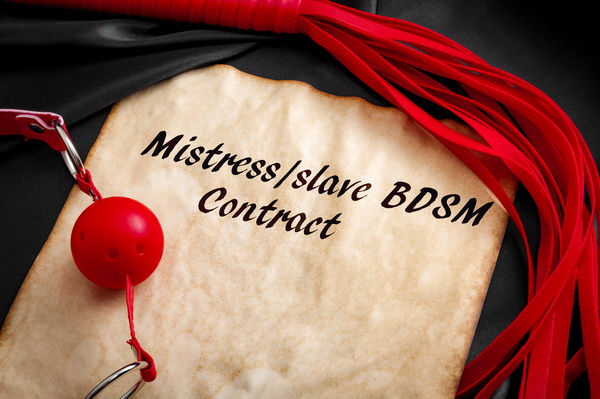
 A BDSM agreement organises communication; it never replaces current consent.
A BDSM slave contract is a conversation and documentation tool for a consensual D/s dynamic. It can set out roles, wishes, limits, rules, safewords, aftercare and privacy in a clear format. It does not transfer ownership of a person or create irrevocable control over anyone.
The slave contract template below is gender-neutral and can be adapted for Femdom, Maledom, switch or other dynamics. Terms such as Master, Mistress or slave describe voluntarily chosen roles within a BDSM fantasy, not a person's legal or human status.
- A signature never replaces current consent to a specific act.
- Anyone may stop an activity, a scene or the entire agreement at any time.
- A safeword, a non-verbal stop signal and an immediate response to either are essential safety rules.
- This template is not legal advice and cannot make an unlawful act lawful.
- 1 What is a BDSM slave contract for?
- 2 Consent comes before the role-play
- 3 What should a safe BDSM contract include?
- 4 Template: BDSM slave contract to customise
- 4.0.1 Preamble
- 4.0.2 1. Purpose, roles and scope
- 4.0.3 2. Voluntary consent, withdrawal and pauses
- 4.0.4 3. Wishes, conditions and limits
- 4.0.5 4. Safeword, stop signal and check-ins
- 4.0.6 5. Rules, tasks and discipline
- 4.0.7 6. Body, clothing and everyday life
- 4.0.8 7. Health and emergencies
- 4.0.9 8. Third parties, public settings and location
- 4.0.10 9. Photos, videos and personal data
- 4.0.11 10. Aftercare and debrief
- 4.0.12 11. Duration, review and ending
- 4.0.13 12. Signatures and appendices
- 5 Appendix: use Yes, Maybe and No lists
- 6 What should not appear in a safe slave contract?
- 7 Download the slave contract PDF template
- 8 Conclusion: clear rules without giving up autonomy
- 9 Related BDSM safety guides
- 10 Frequently asked questions about BDSM slave contracts
- 10.1 Is a BDSM slave contract legally binding?
- 10.2 Can either person withdraw from the agreement at any time?
- 10.3 What is the difference between hard and soft limits?
- 10.4 Why use a non-verbal signal as well as a safeword?
- 10.5 How often should the contract be reviewed?
- 10.6 Can a contract give blanket permission for photos or videos?
What is a BDSM slave contract for?
A useful agreement makes expectations visible before an intense scene or an ongoing power-exchange relationship begins. It separates fantasy from everyday life and prompts conversations that can be missed in the heat of the moment: physical limits, emotional triggers, discretion, contact times, intimate images, aftercare and how the arrangement can end.
- Communication: wishes, uncertainties and hard limits are named clearly.
- Structure: everyone knows which rules apply, where and for how long.
- Safety: stop signals, emergency steps and aftercare are agreed in advance.
- Review: changes can be discussed and recorded at set intervals.
- Ritual: completing the document together can be part of the D/s dynamic without giving up personal autonomy.
The document must never be treated as evidence that someone has agreed to “everything”. Consent is specific, informed, freely given and reversible at any time.
Consent comes before the role-play
A signature is not permanent consent
Talk again before every new or materially changed activity. Silence, freezing, a previous yes or an agreed submissive role do not amount to current consent. If anyone is unsure, pause and check in. A person may change their mind without having to justify the decision and without being punished for it.
Safeword and non-verbal stop signal
Choose an unambiguous safeword and a non-verbal signal for situations in which speech is not possible. Examples include repeatedly dropping an easy-to-grip object or making a clearly agreed hand movement. Test the signal beforehand and make sure it remains available during restraint. A stop signal ends the activity immediately; release, communication and any required aftercare come next. See the guide to the BDSM safeword for more context.
Health, sobriety and an emergency plan
Share acute symptoms, medication, allergies, circulation issues and relevant emotional triggers only to the extent needed for the planned activity. Do not undertake intense play while impaired by alcohol or drugs. Agree how restraints can be released quickly, where the phone, keys and first-aid supplies are kept, and when professional help will be called. A contract cannot replace medical advice or practical safety training.
What should a safe BDSM contract include?
- the names or scene names of the adults involved
- the roles, desired dynamic and clearly defined scope
- wanted activities, conditional activities, hard limits and soft limits
- a safeword, a non-verbal signal and regular check-ins
- relevant health information, emergency steps and agreed aftercare
- rules for everyday life, contact times, public settings and third parties
- how photos, videos, messages, journals and other personal data are handled
- duration, review dates, a process for changes and immediate termination
Start with a short version and revise it after shared experience. Nobody needs to include a risky or unwanted activity simply because it appears in someone else's template.
Template: BDSM slave contract to customise
This sample is not a ready-made rulebook. Delete irrelevant clauses, add your own wording and discuss every point calmly. If an activity is not expressly agreed, it is not automatically permitted.
Preamble
This agreement records the voluntarily chosen BDSM dynamic between __________ and __________. During the agreed play or relationship periods, the participants use the role names __________ and __________. Both remain legally and personally independent people. The agreement creates no ownership and no irrevocable control over body, sexuality, money, contacts or life decisions.
1. Purpose, roles and scope
- Our chosen dynamic is: __________.
- It applies only in these situations or time periods: __________.
- Outside that scope, ordinary communication and full personal decision-making apply.
- Work, family, medical care, financial independence and legal duties take priority.
2. Voluntary consent, withdrawal and pauses
- Every activity requires the free, informed and specific consent of everyone involved.
- Anyone may pause, say no, change a limit or end the whole agreement at any time.
- Withdrawal of consent must not result in punishment, threats, blame, blackmail or disadvantage.
- After a stop signal, safety and calm come before any discussion.
3. Wishes, conditions and limits
Use three lists: Yes for activities wanted now, Maybe for activities that require another specific conversation, and No for hard limits. Record relevant triggers, health restrictions and body areas that must not be stressed. Review the lists on __________.
4. Safeword, stop signal and check-ins
- Safeword for an immediate stop: __________.
- Word meaning slow down, reduce intensity or pause: __________.
- Non-verbal stop signal: __________.
- Check-in question and agreed answer: __________.
The safeword and non-verbal signal end the action immediately. If a gag or restricted movement is involved, the non-verbal signal must remain reliable and accessible.
5. Rules, tasks and discipline
Rules, tasks, rituals or discipline apply only when clearly negotiated in advance. A real boundary violation, safeword or withdrawal of consent must never be treated as “misbehaviour”. Pain, tears, freezing or loss of response are not permission to continue. Discipline must not happen in anger, as intimidation or under the influence of alcohol or drugs.
Agreed rules: __________. Excluded consequences: __________. Maximum duration and intensity: __________.
6. Body, clothing and everyday life
Rules about posture, clothing, grooming, orgasm control or contact times apply only within the expressly agreed scope. Permanent body changes, unsafe weight or exercise demands, and medical decisions are not covered by blanket consent. Tattoos, branding and other lasting changes require a separate current decision free from pressure and do not belong in a general authorisation.
7. Health and emergencies
- Relevant health information for the planned activities: __________.
- Emergency contact, if wanted: __________.
- Quick-release tool and storage location: __________.
- Stop criteria and steps for injury or circulation problems: __________.
End the scene and seek professional help for loss of consciousness, breathing difficulty, severe bleeding, chest pain or other acute warning signs. The agreement must never be used to block access to help.
8. Third parties, public settings and location
Third parties are involved only with separate agreement from everyone concerned. Public humiliation, display or identifiable marking is never authorised in general; it requires a current conversation and must not involve bystanders against their will. Agree the location, who will be present and how anyone can leave safely.
9. Photos, videos and personal data
Create recordings only after specific agreement about the content, timing, storage, access, sharing and deletion date. Consent to a scene is not consent to being recorded or published. Protect intimate files, never share them without permission, and delete them in line with the agreed privacy plan if consent is withdrawn. If complete deletion cannot be guaranteed technically, say so before any recording is made.
10. Aftercare and debrief
Wanted aftercare: __________. Unwanted forms of aftercare: __________. Time for a later check-in: __________. After an intense scene, talk in a calm setting about what felt good, what was difficult and which rules should change.
11. Duration, review and ending
The agreement begins on __________ and will be reviewed no later than __________. It ends immediately when any participant says so. Individual permissions may be removed at any time. When the arrangement ends, return keys and personal belongings and handle data according to the privacy plan; safety and access to help always come first.
12. Signatures and appendices
By signing, the participants confirm only that they have discussed the document together. The signature does not replace future consent and does not restrict anyone's right to say no, pause, seek help or end the arrangement.
Place and date: __________
Signature participant A: __________
Signature participant B: __________
Appendix: use Yes, Maybe and No lists
Assess each activity separately and record conditions such as intensity, duration, body areas, equipment, experience and required aftercare. A product category is not blanket permission for every activity within it.
- Bondage and restraint: restraints from the bondage toys range; specify quick release, monitoring and the non-verbal signal.
- Impact play: hand, crop, paddle or whip; agree body areas and intensity separately.
- Anal and toy play: products from anal toys or sex machines; discuss hygiene, lubricant, speed and stop signals first.
- Enclosures and furniture: for example a BDSM cage; set a time limit, monitoring and immediate opening method.
- Rituals and clothing: a collar from the collars range, forms of address, positions or dress codes; keep everyday life and public settings outside the scope unless separately negotiated.
- Exclude or negotiate separately: permanent changes, recordings, third parties, public exposure, financial control and any activity with elevated physical or emotional risk.
What should not appear in a safe slave contract?
- phrases such as “forever”, “without withdrawal” or “the submissive's body belongs entirely to the dominant”
- blanket consent to all acts, third parties, recordings or publication
- rules forbidding access to medical help, advice, family or trusted people
- threats of publication, financial harm or punishment for ending the arrangement
- rules that endanger sleep, food, medication, money or health
- claims that a signature makes a boundary violation lawful
A careful contract supports communication; it must not legitimise control outside voluntarily chosen roles. If pressure, fear, surveillance or isolation prevents a free withdrawal, there is no reliable consent.
Download the slave contract PDF template
The existing slave contract PDF template can be used as a working document. The file is in German, so translate and review every clause before use. Delete blanket or irrelevant wording and add the safeword, non-verbal signal, privacy, aftercare and the right to withdraw at any time. The participants' current agreement always takes priority over an older template.
Conclusion: clear rules without giving up autonomy
A BDSM slave contract is useful when it encourages honest conversations and makes limits visible. It is not a licence and does not transfer personal rights. The clearer the scope, stop signals, aftercare, privacy and review process, the better the template can support a responsible and enjoyable D/s dynamic.
Frequently asked questions about BDSM slave contracts
Is a BDSM slave contract legally binding?
It is primarily a conversation and documentation tool, not legal advice. It does not create ownership of a person or make an unlawful act lawful. A signature never replaces current consent.
Can either person withdraw from the agreement at any time?
Yes. Anyone may stop an activity, a scene or the entire agreement at any time. Withdrawal must not be met with punishment, threats, blame, blackmail or disadvantage.
What is the difference between hard and soft limits?
Hard limits are excluded. Soft limits or Maybe items are considered only after another specific discussion and under the agreed conditions. An activity is not automatically allowed simply because it was not listed.
Why use a non-verbal signal as well as a safeword?
A gag, breathing difficulty, overwhelm or loss of speech can make a word impossible. A tested hand signal or an easy-to-grip object that can be dropped provides a way to stop immediately.
How often should the contract be reviewed?
Review it after new experiences, relationship changes or health changes and at a regular scheduled date. Needs and limits can change, so the document should remain easy to update.
Can a contract give blanket permission for photos or videos?
No. Recording requires separate agreement about content, timing, storage, access, sharing and deletion. Consent to a scene is not consent to a recording.


Sehr gut geschrieben so ein Vertrag. Öchte ich auch haben würde alles abgeben auch mein monatliches einkommen
Super Vertrag. @Michael Irrgang Ach ja?
Wirklich sehr gut geschrieben. Würde mir auch gefallen.
@Lady Mia ich auch
Genau den benutze ich für meine Sklaven.
Den werde ich für meine Sklavin nutzen , der paßt genau !
Ein Sklavenvertrag in BDSM ist ein wichtiger Aspekt, der oft übersehen wird, aber eine entscheidende Rolle spielt. Es handelt sich dabei um eine Vereinbarung zwischen dem dominanten und dem unterwürfigen Partner, die die Grenzen, Regeln und Pflichten in ihrer Beziehung definiert. Ein solcher Vertrag kann dazu beitragen, die Sicherheit und das Vertrauen in der Beziehung zu stärken.
Ein Sklavenvertrag ist kein rechtlich bindendes Dokument, sondern dient als Leitfaden für die BDSM-Beziehung. Er kann jederzeit geändert oder aufgehoben werden, wenn beide Partner dem zustimmen. Der Vertrag kann so detailliert oder so allgemein sein, wie die Partner es wünschen. Einige Verträge können spezifische Szenarien und Aktivitäten, Pflichten und Regeln, sowie Sicherheitsmaßnahmen und Safe-Words enthalten.
Es ist wichtig zu betonen, dass ein Sklavenvertrag immer auf gegenseitigem Einverständnis beruht. Beide Partner sollten sich wohl und sicher fühlen und das Recht haben, jederzeit Nein zu sagen. Ein Sklavenvertrag ist kein Freifahrtschein für Missbrauch oder Nicht-Einhaltung von Grenzen.
Es gibt verschiedene Arten von Sklavenverträgen, die je nach den Vorlieben und dem Komfortlevel der Partner variieren können. Ein klassischer Sklavenvertrag ist für Anfänger geeignet und skizziert die grundlegenden Rechte, Pflichten und Tabus. Ein fortgeschrittener BDSM-Vertrag bietet mehr Details zu Fantasien, Demütigungen und Nachsorge. Ein 24/7 Sklavenvertrag ist formeller und eignet sich für einen BDSM-Lebensstil, in dem das "Spiel" nie endet.
Es ist nicht empfohlen, einen solchen Vertrag mit jemandem zu schließen, den man nicht gut kennt oder dem man nicht vertraut. Ein Sklavenvertrag sollte immer die Sicherheit und das Wohlbefinden aller Beteiligten gewährleisten.
Ich möchte auch einen abschließen, und mich
komplett unterwerfen!